

What Does Matcha Taste Like?


Ask ten people “what does matcha taste like?” and you’ll hear variations of the same melody: oceanic, creamy, sweet-grassy, deeply umami, with a clean, satisfying finish. The nuance, though, depends on origin, grade, and how we whisk it. We’ve sipped bowls in Uji and Kagoshima with tea masters and brewed countless cups at home in Ireland: matcha’s flavour can be plush and sweet like steamed spinach and nori, or brisk and lively with a soft bite. Here’s how to recognise the core profile, what changes it, and how to brew to bring out the best.
The Core Flavour Profile And Mouthfeel
Umami And Savoury Depth
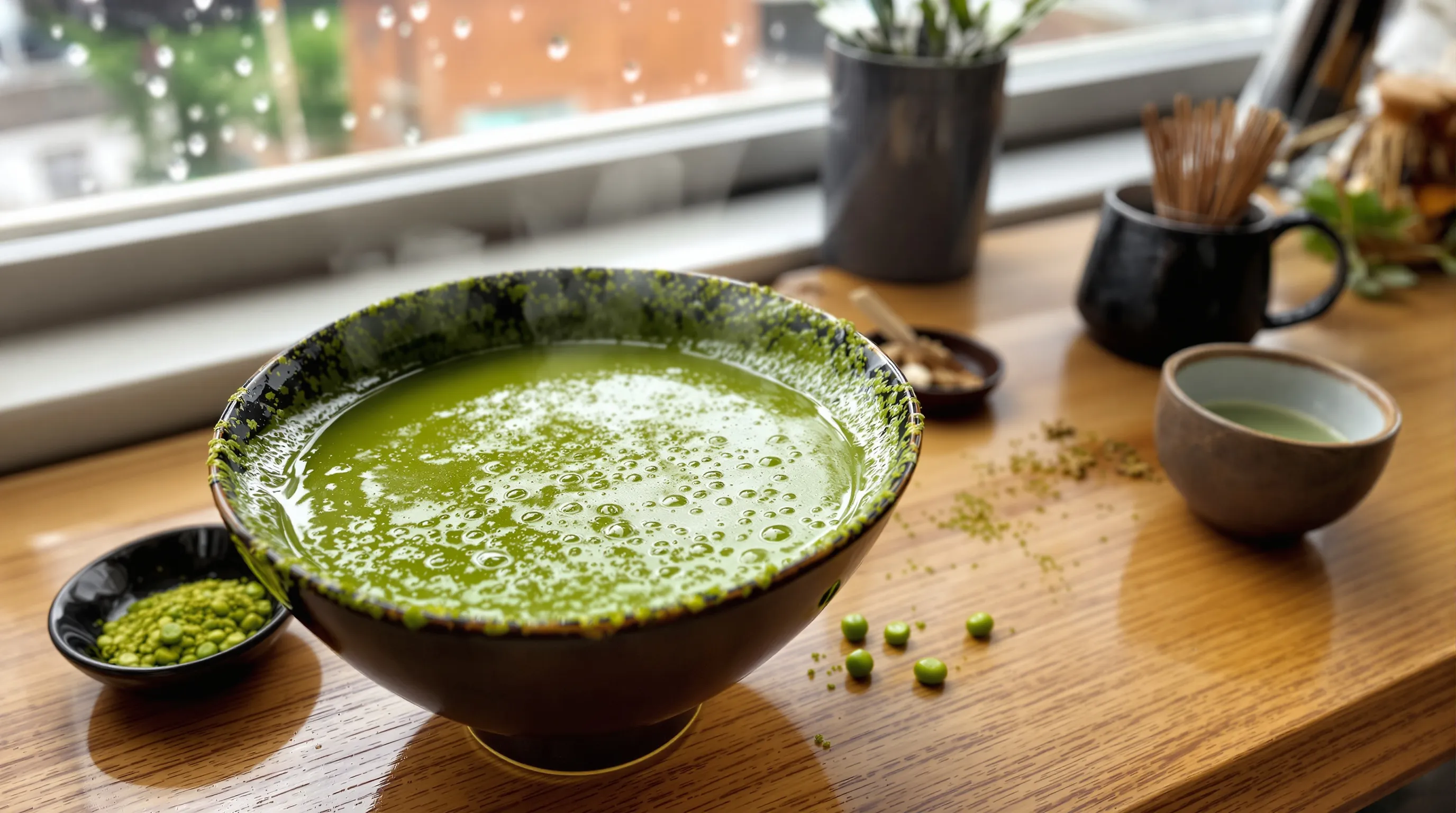
At its heart, matcha is savoury. Shade-growing boosts L-theanine and amino acids, giving a brothy umami similar to gyokuro. Good ceremonial grade matcha feels like a light vegetable stock with notes of nori, steamed spinach, and a whisper of Parmesan rind. That savouriness grounds the cup, making it feel nourishing rather than merely aromatic.
Natural Sweetness, Fresh Grass, And Sea Breeze Notes
Balanced matcha carries a gentle, natural sweetness, think baby peas or fresh-cut hay after rain. Many premium Uji lots show a soft sea-breeze character (not “fishy”, but marine: kelp, saline air). The grassy note should be fresh and springlike, never coarse. When we taste lots in Kyoto, we look for that clean green sweetness that lingers at the tip of the tongue.
Bitterness, Astringency, And A Clean Finish
Some bitterness is part of the profile, especially in more robust or culinary grades, but it should read as pleasant, a cocoa-like snap rather than a harsh bite. Astringency dries lightly, helping the finish feel crisp. If bitterness dominates, it’s often a sign of high water temperature, poor leaf material, or stale powder. Well-made matcha resolves with a refreshing, mouthwatering finish.
Silky Body, Microfoam, And Lingering Aftertaste
Because we consume the whole leaf, matcha has body. Properly whisked usucha creates fine microfoam that feels velvety, almost cappuccino-like, without heaviness. The texture should coat the palate, carrying flavour for a long, sweet-green aftertaste. Koicha (thick style) turns syrupy and concentrated, intense umami with a dense, enveloping mouthfeel.
Factors That Shape Taste
Shade-Growing, Cultivars, And Terroir
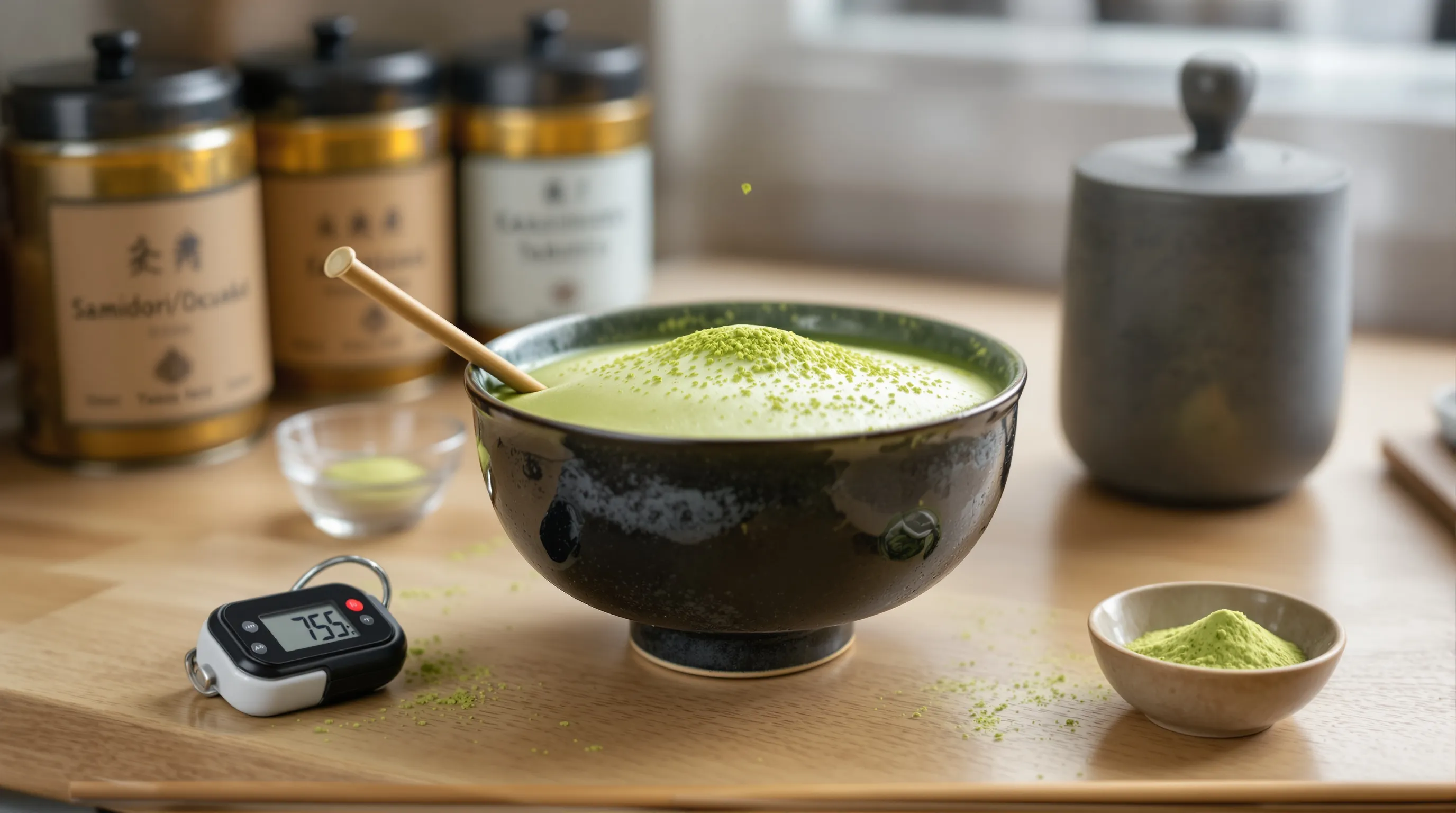
Three weeks of shade before harvest elevates chlorophyll and theanine, softening bitterness and boosting umami. Cultivars matter: Samidori and Okumidori from Uji often show rounded sweetness and elegant aroma: Yabukita can be brisker. Terroir plays its part too, Uji (Kyoto) brings classic balance, Kagoshima leans bright and aromatic, while select mountainous gardens deliver striking clarity.
Grade, Stone-Milling, And Freshness
Ceremonial grade matcha uses the youngest tencha leaves, destemmed and deveined, then slow stone-milled to preserve aroma and texture. This yields sweeter, creamier cups. Culinary grade is bolder for lattes and baking. Ultra-fine milling creates that hallmark silkiness: heat from fast milling can dull flavour. Freshness is huge, vibrant colour, fragrant aroma, no stale or hay-like edge. We rotate stock frequently and favour small-batch lots so flavour stays vivid.
Water Temperature, Ratio, And Technique
Temperature is the make-or-break. 70–80°C highlights umami and sweetness: hotter water spikes bitterness. Ratios guide intensity: for usucha, about 2 g (1 heaped teaspoon) to 60–80 ml water: for koicha, 3–4 g to 30–40 ml. Sift to avoid clumps, then whisk in a fast W-motion until microfoam forms. Technique unlocks aroma as much as flavour.
How Matcha Compares To Other Drinks
Matcha Versus Sencha, Gyokuro, And Hojicha
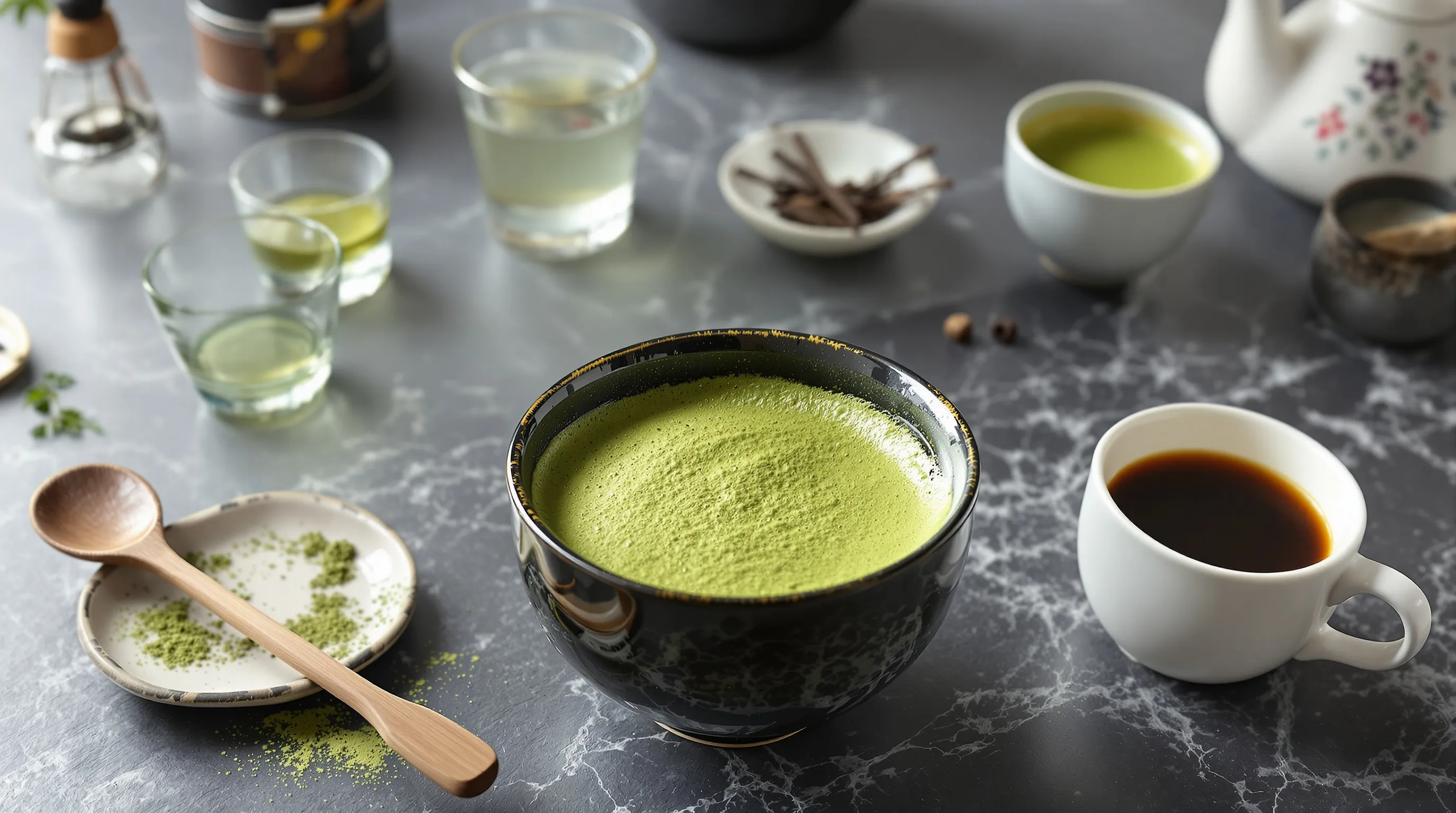
Sencha is steeped, so it tastes lighter, leafier, and more astringent, with a clear infusion rather than creamy body. Gyokuro overlaps with matcha on umami due to shade-growing, but it’s silk-water rather than foam, and its sweetness feels honeyed. Hojicha is roasted: nutty, toasty, low-caffeine, zero sea-breeze. Matcha sits at the savoury-sweet, creamy end of the Japanese green tea spectrum.
Matcha Versus Coffee And Cocoa
Coffee’s bitterness is darker (roast, quinic acids), and the body comes from brewed oils rather than suspended leaf. Matcha’s buzz is calmer, L-theanine tempers caffeine for a focused lift. Compared with cocoa, matcha’s “green chocolate” moment is the soft bitterness and lingering sweetness, but the flavour spins toward spinach, nori, and meadow rather than malt and caramel.
Taste Across Preparations
Usucha Versus Koicha
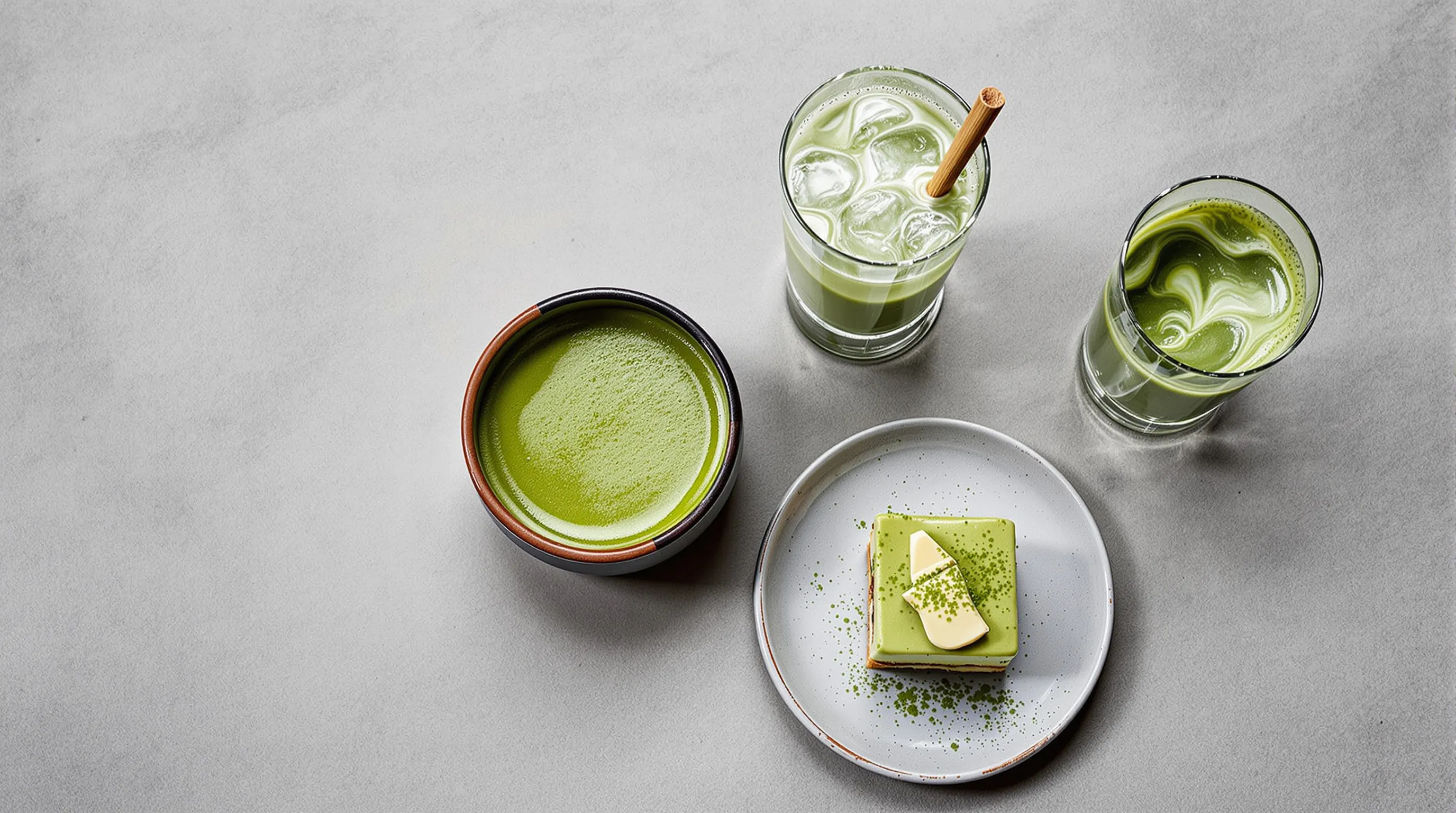
Usucha (thin) is bright, foamy, and balanced, our go-to for daily bowls. The sweetness steps forward, the sea-breeze note is delicate, and the finish is crisp. Koicha (thick), used in formal tea ceremony with high-grade matcha, is an umami bomb: minimal bitterness, ultra-silky texture, almost custardy concentration. It’s less about refreshment and more about depth.
Lattes, Iced Drinks, And Smoothies
In milk, matcha tastes like green velvet. Dairy or oat milk rounds bitterness and amplifies sweetness: almond can add marzipan notes. For iced matcha, keep water cooler (60–70°C to bloom, then ice) to protect aromatics, expect a cleaner, snappier profile. In smoothies, citrus brightens, banana softens, and cacao partners well if you enjoy a tiramisu-adjacent vibe.
Desserts And Savoury Pairings
In desserts, matcha’s grassy sweetness cuts through fat: think matcha tiramisu, roll cake, or gelato. With white chocolate, it reads like pistachio-meets-sea-air. Savoury pairings? Matcha salt on tempura, or a koicha drizzle with fresh tofu. The umami harmonises with shellfish and mushrooms, too.
Brew To Bring Out The Best Flavour
Temperatures And Ratios That Highlight Umami
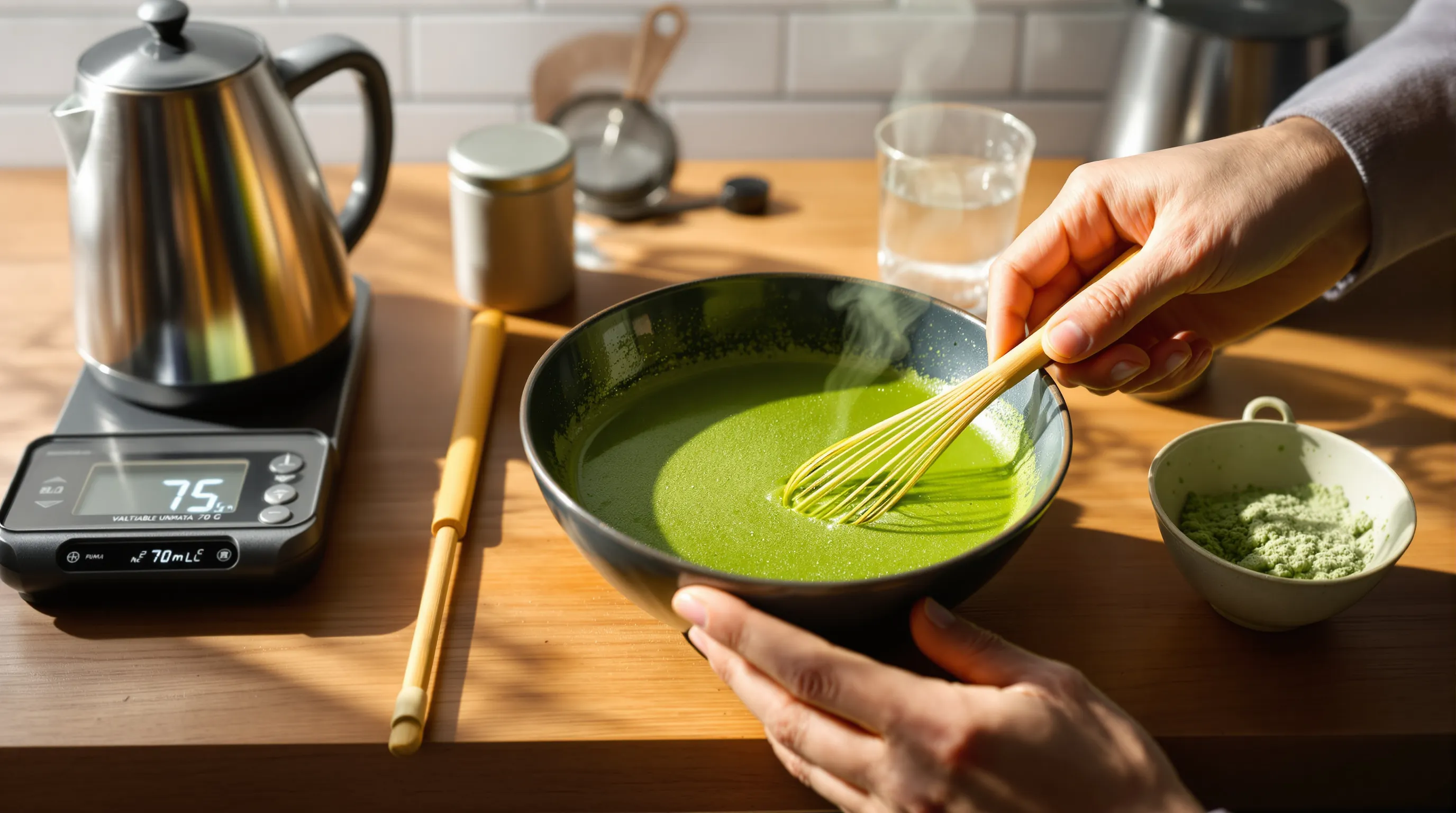
Aim for 70–80°C. Below 65°C, flavours can feel muted: above 85°C, bitterness spikes. Start with 2 g matcha to 70 ml water for usucha. Adjust: more water for softer sweetness, less for a punchier, savourier cup. For koicha, use 3–4 g to 30–40 ml and knead slowly with the whisk, no foam required.
Whisking For Texture, Aroma, And Balance
Sift first. Warm your chawan and add a splash of cool water to make a paste, then top up with hot water. Whisk quickly in a zigzag to raise fine bubbles: finish with a gentle surface pass to polish the foam. Good microfoam carries aroma into every sip and makes the sweetness pop.
Troubleshooting Off-Flavours
- Bitter or harsh: water too hot, or too much powder. Lower to ~75°C and refine ratio.
- Flat, dull, or hay-like: stale matcha or poor storage. Look for vivid green and fresh aroma.
- Fishy: usually old or low-grade: true marine notes should be kelpy, not sour.
- Gritty: didn’t sift or under-whisked. Sift and whisk faster: use a fine sieve and bamboo whisk.
Choosing And Storing Matcha For Your Palate
Reading Grades And Labels With Taste In Mind
If you want a soft, sweet, foam-forward bowl, choose ceremonial grade matcha, ideally single-origin from Uji or Kagoshima. For lattes and baking, culinary or latte grade is designed to cut through milk and butter. Organic matcha powder can taste slightly greener and gentler: non-organic top lots may show heightened aroma. Match labels that mention cultivar (e.g., Okumidori) and harvest window often correlate with clearer flavour intent.
Colour, Aroma, And Feel As Quality Signals
Look for luminous, jade-green powder (no brown or yellow tinge). Aroma should be fresh, sweet grass, nori, light cacao, not musty. Between the fingers, it should feel talc-fine and cling slightly from static. These signals predict sweetness, umami, and a creamy mouthfeel in the cup.
Storage And Shelf Life To Preserve Flavour
Air, light, heat, and moisture are the enemies. Keep tins sealed, in a cool, dark cupboard or the fridge if you open them often (let them return to room temp before unsealing to avoid condensation). Aim to finish an opened tin within 4–8 weeks for peak flavour. We package in light-safe, resealable tins and rotate stock, whether you’re buying a single tin or matcha wholesale in Ireland.
Conclusion
So, what does matcha taste like? When it’s fresh and properly whisked, it’s a graceful balance of umami, gentle sweetness, sea-kissed greens, and a clean, refreshing finish, delivered on a silky, microfoamed body. The grade, origin, and your technique steer the experience from bright and airy to deep and luxuriant. If you’re exploring, start with a ceremonial lot for bowls and a latte grade for milk drinks: tune temperature and ratios until the cup sings. At Matcha Tea Ireland, we source from Uji, Kyoto, and Kagoshima to showcase that spectrum, so you can find the flavour that feels like yours.