

Best Matcha Powder: How To Choose Quality For Home And Professional Use


If you’ve ever wondered why one “best matcha powder” tastes creamy-sweet and emerald-bright while another leans flat or bitter, you’re not alone. We’ve spent years tasting, sourcing, and serving Japanese matcha, from quiet morning bowls at home to high-volume café service, and there are reliable cues that separate exceptional from average. In this guide, we’ll decode grades, terroir, labels, and techniques so you can buy smart, brew beautifully, and choose confidently for both personal use and professional menus.
What Makes Matcha “Best”: Grades, Cultivars, And Origin
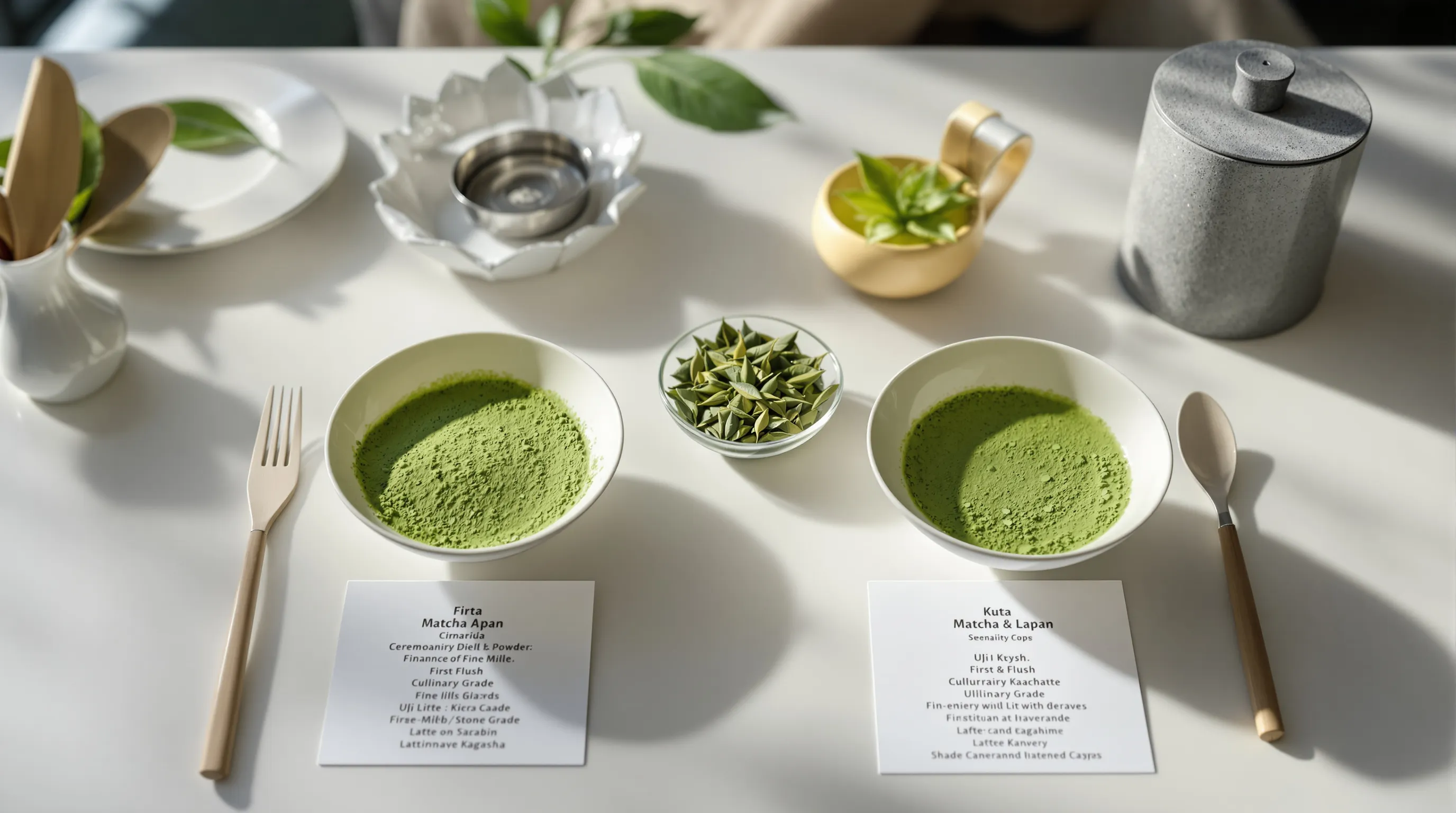
Ceremonial vs. Culinary Grades
“Best” depends on purpose. For straight sipping (usucha/koicha), ceremonial-grade matcha is the gold standard: shade-grown first flush leaves, de-veined and de-stemmed (tencha) and stone-milled to a fine, talc-like powder. Expect pronounced umami, natural sweetness, and a long, clean finish. Culinary-grade, meanwhile, is crafted to hold its own in milk, sugar, or heat. It’s slightly more robust and a touch more astringent, perfect for lattes, baking, and smoothies where delicate aromatics would get lost.
First Flush, Shade-Grown, And Stem Content
Top-tier matcha typically comes from the first spring harvest (ichibancha). Fields are shaded 3–4 weeks pre-harvest, boosting chlorophyll and L-theanine while moderating catechin bite. Less stem and vein content means smoother texture and deeper sweetness, high-grade matcha is carefully sorted to achieve this. If we’re chasing the best matcha powder for sipping, we look for first-flush, heavily shaded lots with meticulous tencha processing.
Regional Terroir: Uji, Kyoto, Kagoshima, And Beyond
Origin matters. Uji (Kyoto) is renowned for elegant, balanced profiles with layered sweetness. Nearby Kyoto regions often echo that signature poise. Kagoshima, further south, brings a sunnier, slightly bolder expression with vibrant color and a clean, modern profile, great for lattes and contemporary menus. Other prefectures (Shizuoka, Mie, Fukuoka) produce excellent matcha too: what’s key is farm-level quality and skilled finishing, not just the postal code.
How To Read The Label: Certifications, Freshness, And Milling
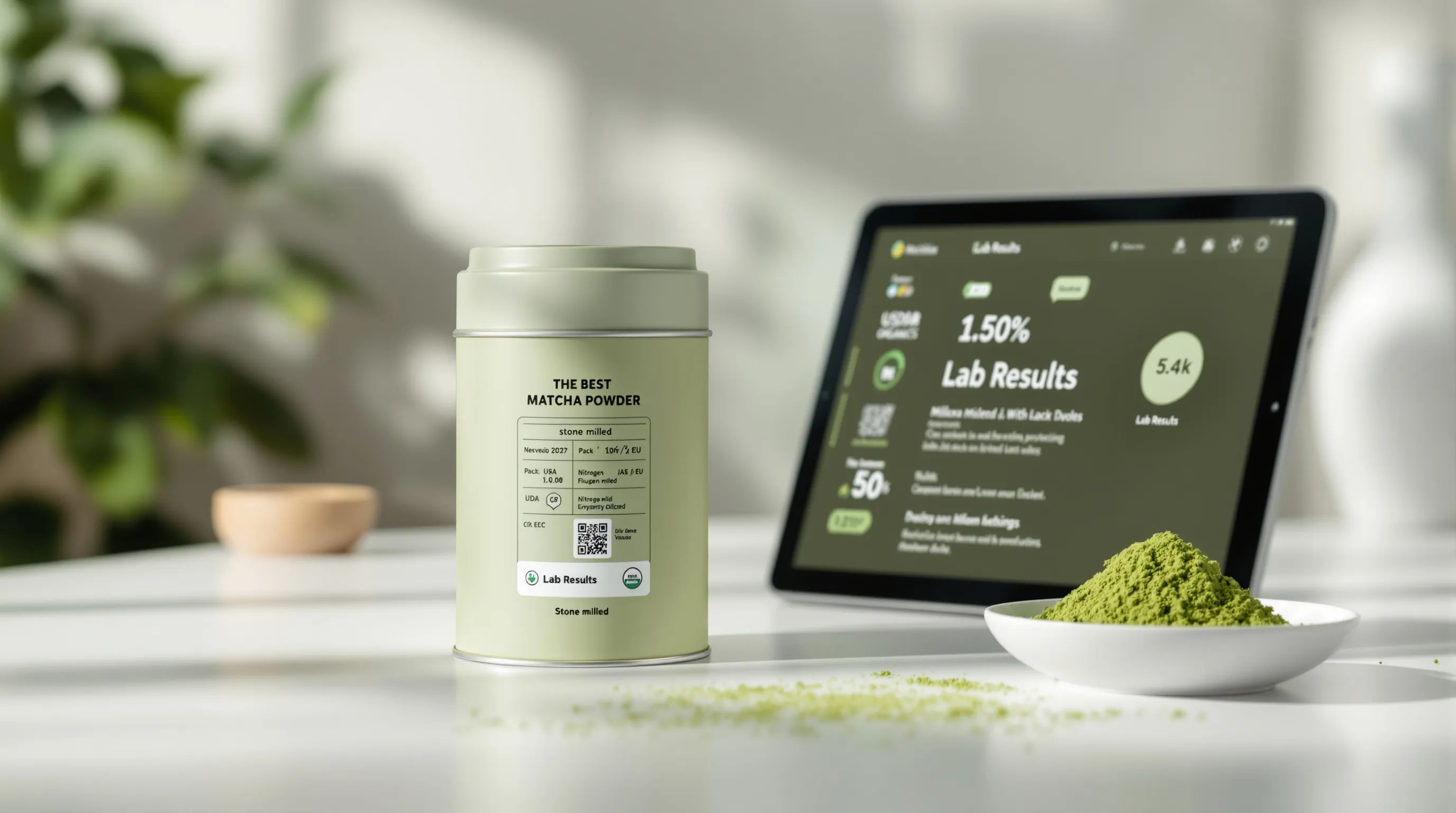
Harvest Dates, Batch Codes, And Oxygen Exposure
The label should tell a story. Look for harvest year (or at least a recent milling/pack date) and a batch or lot code for traceability. Matcha is sensitive to oxygen and light: nitrogen-flushed packs and resealable, opaque tins help. Once opened, we aim to finish a tin within 4–8 weeks for peak flavor. If freshness data is vague, we ask the seller directly, clear, prompt answers are a good sign.
Stone-Milled vs. Jet-Milled Texture And Flavor Impact
Traditional granite stone mills run cool and slow, keeping aromas intact and particle size ultra-fine for a silkier froth. Jet or impact mills run faster and can warm the powder: some producers use advanced cooling to mitigate this, but the texture and palate feel are often the giveaway. For ceremonial use, we prioritize stone-milled lots. For high-volume culinary applications, a well-executed modern mill can be perfectly suitable and cost-effective.
Organic Status, Residue Testing, And Transparency
Organic certification (e.g., JAS, EU, USDA) is valuable, but it’s not the whole picture. We also look for third-party residue testing, farm practice disclosures, and clear origin details down to the cooperative or estate. The best matcha powder comes from producers who share lab results, explain fertilization and shading methods, and stand behind their harvest timings.
Tasting And Color Guide: Sensory Cues Of Top-Tier Matcha
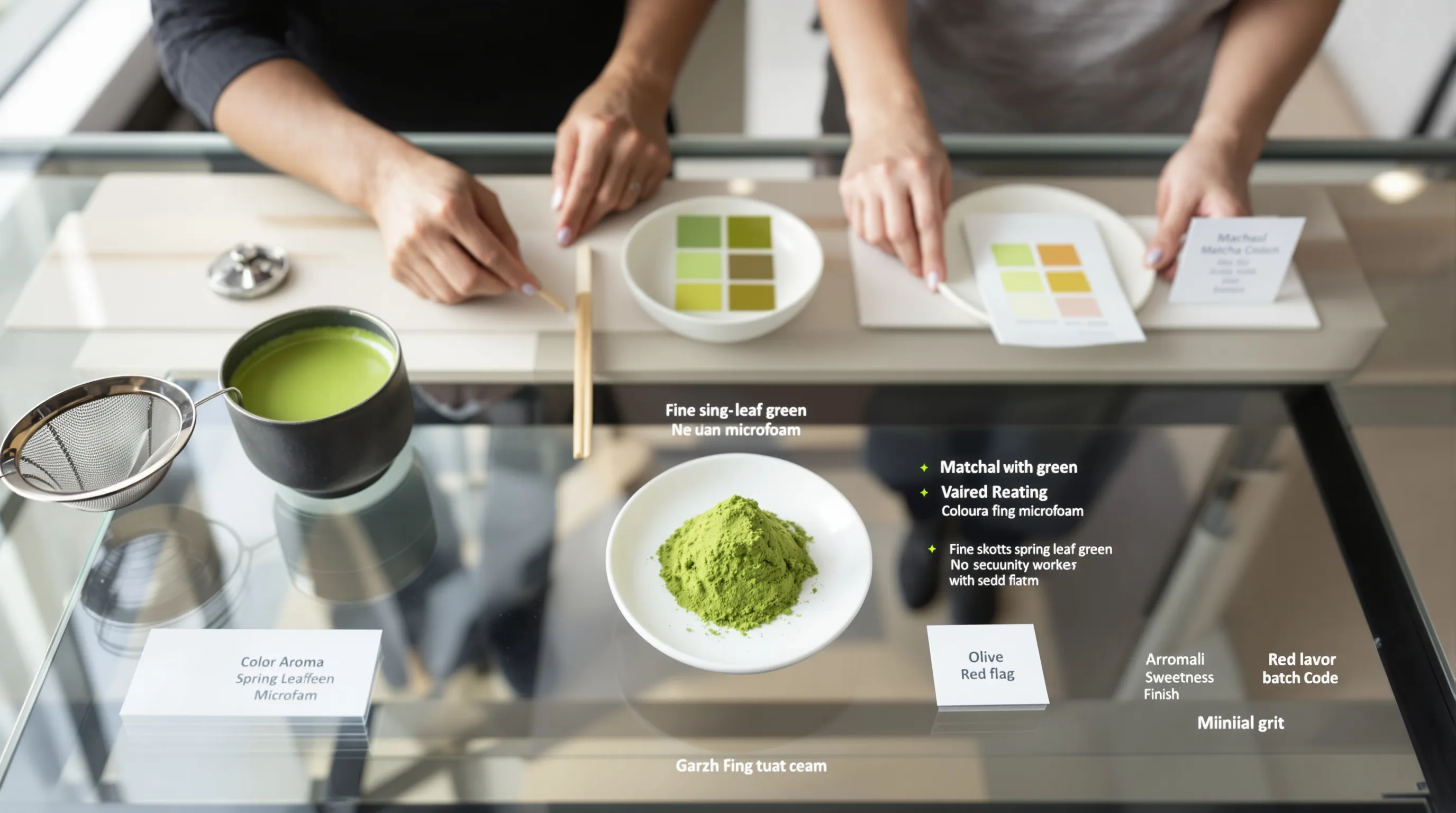
Aroma, Umami, Sweetness, And Finish
Open the tin. Great matcha blooms with fresh sea breeze, steamed greens, and soft confectioner’s sweetness, sometimes a hint of cacao butter or nori. On the palate, look for round umami, a gentle natural sweetness, and a clean finish with minimal bitterness. If your first sip demands sugar, the grade likely skews culinary.
Vibrant Green Color, Silkiness, And Foam
Color should be bright, vivid green, think young spring leaves, not olive or brownish. Particle fineness shows up in the bowl: the surface should whisk to a tight, even microfoam with minimal grit. Silkiness on the tongue is a hallmark of careful milling and low stem content.
Common Red Flags To Avoid
- Dull olive or yellow tones (often age or insufficient shading)
- Coarse texture or stubborn clumps that don’t disperse after sifting
- Harsh bitterness or a metallic, drying finish
- Vague origin, no batch code, or no mention of first flush for “ceremonial” claims
The Best Matcha Powders Right Now
Here are expert-curated options available through Matcha Tea Ireland, chosen for quality, consistency, and authenticity.
Top Picks for Sipping (Ceremonial Grade)
Ippodo Ummon Matcha
A flagship ceremonial blend from Kyoto’s iconic Ippodo Tea Co.
- Profile: Deep umami, creamy body, mellow sweetness
- Ideal For: Pure sipping (usucha or koicha)
- Why It’s Best: First-flush leaves, traditional stone-milling, elegant packaging
Marukyu Koyamaen Kinrin Matcha
A premium Uji ceremonial matcha prized for balance and aroma.
- Profile: Silky texture, nutty-sweet aroma, lingering clean finish
- Ideal For: High-end tea ceremonies or mindful home rituals
- Why It’s Best: Generations of craftsmanship; used in Japan’s top tea schools
Balanced & Versatile Options (For Sipping and Lattes)
Ippodo Sayaka Matcha
Bright, approachable, and aromatic.
- Profile: Mild, smooth sweetness; gentle umami
- Ideal For: Both straight bowls and modern lattes
- Why It’s Best: Beginner-friendly and reliable flavour balance
Marukyu Koyamaen Yugen Matcha
A medium-bodied ceremonial matcha perfect for cafés.
- Profile: Strong colour, rich taste, low bitterness
- Ideal For: Everyday use, latte bars, or premium drinks menus
Great Value for Daily Use
Ippodo Wakaki Matcha
An affordable yet authentic Kyoto matcha.
- Profile: Fresh, light, and pleasant with gentle astringency
- Ideal For: Daily home sipping or smoothies
- Why It’s Best: Great entry point to authentic Japanese matcha
Marukyu Koyamaen Aoarashi Matcha
A bold, vibrant matcha for culinary creativity.
- Profile: Bright green, slightly grassy, lively finish
- Ideal For: Lattes, desserts, and iced matcha drinks
Matcha For Different Uses: Sipping, Lattes, And Culinary
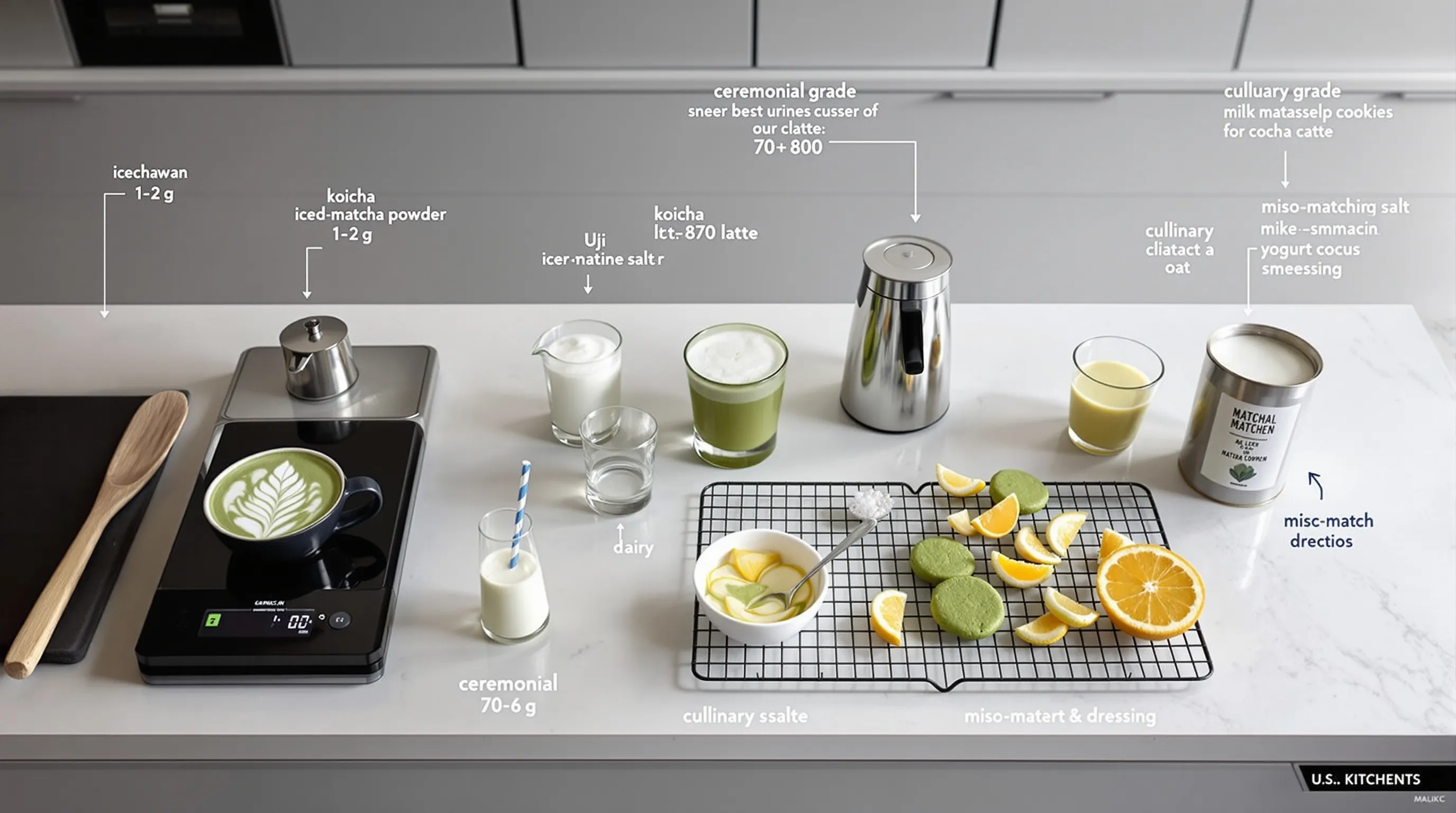
Straight Matcha (Usucha/Koicha)
For usucha (thin tea), we use 1–2 g matcha with ~60–80 ml water: for koicha (thick tea), we double or triple the powder with less water, whisking slowly to a syrupy body. Choose a ceremonial-grade from Uji or Kyoto for layered umami and sweetness.
Milk-Based Drinks And Cold Applications
For lattes, smoothies, and shaken iced drinks, a vibrant premium culinary or “latte-grade” shines. Its bolder character cuts through milk (dairy or oat/almond) and syrups. Pre-dissolve by whisking with a splash of 70–80°C water before adding cold milk or ice for a lump-free finish.
Baking, Smoothies, And Savory Dishes
Heat mutes delicate aromatics, so we reserve top ceremonial for sipping. For cakes, cookies, or savory rubs, a quality culinary matcha preserves color and flavor without overspending. In smoothies, pair matcha with citrus, pineapple, or yogurt for brightness: in savory, try a matcha-sesame salt on grilled fish or a miso-matcha dressing.
Buying Tips For Individuals And Businesses

Serving Cost, Yield, And Portioning
Plan around 1–2 g per serving. A 30 g tin yields roughly 15–30 cups depending on style. For cafés, calculate cost-per-gram and set beverage recipes (e.g., 2 g per 12 oz latte) to keep margins consistent. The best matcha powder for service is the one that balances sensory quality with predictable cost.
Pack Sizes and Storage
- Home users: 20–40 g tins for freshness
- Businesses: 100 g–1 kg packs; store airtight and cold
- Rotate stock and finish open packs within 2 months
Wholesale and White Label
At Matcha Tea Ireland, we supply retail and wholesale worldwide, including custom white-label options for cafés and wellness brands. We provide lot traceability, origin transparency, and eco-friendly packaging.
Preparation Basics To Get The Most From Your Matcha
Water Quality, Temperature, And Ratios
Use low-mineral, fresh water. We brew at 70–80°C (160–175°F) for sipping: slightly hotter (up to ~85°C/185°F) can work for sturdy latte grades. Start with 2 g matcha to 60–80 ml water for usucha: adjust to taste.
Sifting, Whisking Technique, And Tools
Sift matcha into a warm chawan to prevent clumps. Add a splash of water, then whisk with a chasen in quick M- or W-motions until fine foam forms. For koicha, use slow kneading strokes. A fine-mesh strainer, bamboo whisk, and a quality scoop (chashaku) make a difference.
Avoiding Bitterness And Off-Flavors
- Don’t use boiling water.
- Keep tools clean and dry: residual soap ruins aroma.
- Store airtight and cold: oxidation dulls sweetness.
- If the brew tastes sharp, drop the temperature, add a bit more water, or try a smoother grade.
Sustainability And Ethical Sourcing
Shade Netting, Soil Health, And Biodiversity
Responsible farms manage shade netting to protect leaf development while minimizing waste, rotate organic matter to support microbial life, and maintain hedgerows for habitat. Healthy soil equals tastier tea, it’s not marketing fluff: it shows up in the cup.
Farmer Partnerships And Traceability
We prefer long-term relationships with heritage producers in Kyoto, Uji, and Kagoshima because consistency and traceability matter. Transparent paperwork, small-lot milling, and regular lab tests reduce guesswork. At Matcha Tea Ireland, we partner directly with Japanese tea masters and offer documentation for wholesale buyers who need spec sheets and residue testing for compliance.
Conclusion
Choosing the best matcha powder isn’t mysterious once you know what to look for: first-flush, well-shaded tencha: credible origin and batch data: careful milling: and a vibrant, sweet-umami cup. Match grade to use, ceremonial for sipping, premium culinary for lattes, culinary for heat, and protect your investment with good storage and sound technique.
If you’re ready to upgrade your daily bowl or standardize a café menu, we’d love to help. At Matcha Tea Ireland, we source authentic Japanese matcha from Uji, Kyoto, and Kagoshima, with options from organic ceremonial tins to bulk and white label, shipped within Ireland and worldwide.
Explore our full Matcha Collection — from ceremonial tins to wholesale matcha — all sourced in Japan and delivered worldwide.
Frequently Asked Questions
What’s the difference between ceremonial and culinary grades, and which is the best matcha powder for lattes or sipping?
Ceremonial grade uses first-flush, shade-grown tencha, stone-milled ultra-fine for sweet, umami-rich bowls (usucha/koicha). Culinary grade is slightly bolder and more astringent to cut through milk, sugar, and heat. Choose ceremonial for straight sipping; pick premium culinary or “latte grade” for lattes, baking, and smoothies.
How do I read a matcha label to verify freshness and quality?
Look for harvest year or milling/pack date, plus a batch code for traceability. Favor nitrogen-flushed, opaque, resealable tins. Clear origin details and residue testing are strong signals. If freshness data is vague, ask the seller—prompt, transparent answers usually correlate with better sourcing and handling.
What color, aroma, and texture signal the best matcha powder?
Top matcha shows a vivid emerald green, smells like fresh sea breeze, steamed greens, and soft confectioner’s sweetness, and whisks to tight microfoam with silky mouthfeel. Red flags include dull olive tones, gritty texture, harsh bitterness, metallic finish, and vague origin or first-flush claims without proof.
How should I store matcha, and how long does it stay peak after opening?
Keep matcha airtight, cool, and dark in an opaque tin. For homes, smaller 20–40 g tins help maintain freshness; cafés can decant from bulk into daily-use tins. After opening, aim to finish within 4–8 weeks (1–2 months for larger packs) to preserve color, aroma, and sweetness.
Does matcha contain caffeine and L-theanine, and how do they affect focus?
Yes. A typical 2 g serving has roughly 60–70 mg caffeine, moderated by L-theanine, an amino acid linked to calm alertness. The combo often feels smoother than coffee—steadier focus with fewer jitters. Water temperature and grade also influence perceived bitterness and smoothness in the cup.
How much matcha is reasonable to drink per day?
For most healthy adults, 1–3 servings (about 2–6 g total) per day is a common guideline, providing 60–210 mg caffeine. Start lower if you’re caffeine-sensitive, pregnant, or on medications, and consult your clinician. Use high-quality, tested matcha to minimize contaminants, and avoid boiling water to limit bitterness.


